
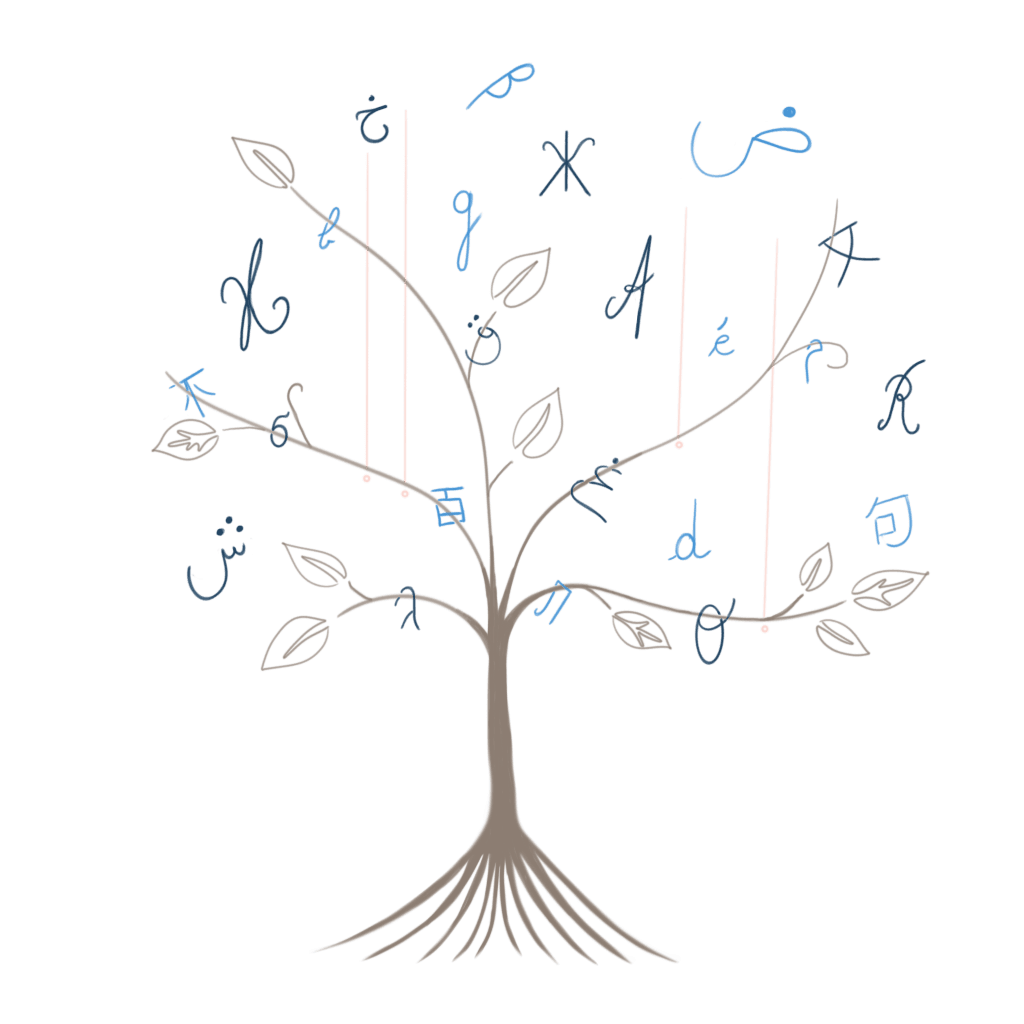
Learn, transmit and connect in a new way thanks to a holistic approach to languages, cultures and communication.
Find out more
Discover my background and the methods that underpin my holistic approach to languages, culture and communication.
Services
Explore my tailor-made services, designed to meet the needs of learners, educators and facilities.
Resources
Discover the references and works that inspire my approach, as well as practical tools available at no cost to enhance your projects.
Communication expertise
I use my training in linguistics (Master's 2) to support a variety of groups (UFMs, ASDs, professionals, etc.) in communication, transmission and learning using methods adapted to their specific needs.
Inclusive, tailor-made services
My projects value the diversity of cultural and personal experiences, whether in terms of first languages, specific social skills or professional interactions, to strengthen transmission and mutual understanding.
A global and human approach
I combine linguistic tools, pedagogy, non-violent communication and intercultural practices to remove obstacles to transmission, enrich exchanges and encourage autonomy in a variety of contexts.
Meeting specific needs
My approach adapts to the challenges: including people with ASD, managing teams in multicultural contexts, combating illiteracy or supporting educational and social structures.
Derniers articles :
-
Read more…: Ce que les mythes sur le plurilinguisme coûtent vraimentUn commentaire YouTube, posté sous une vidéo de linguistique. Son auteur distingue deux types de bilingues : ceux qui s’en sortent bien… et les autres. Ce commentaire n’est pas un cas isolé. C’est une position répandue, exprimée avec une assurance qui donne l’impression d’une évidence. Et c’est, point par point, contredit par la recherche.
-
Read more…: La langue détermine-t-elle la pensée ? Ce que Sapir-Whorf dit vraimentL’idée que chaque langue ouvre un monde cognitif inaccessible aux autres est intellectuellement belle. Mais séduisante ne veut pas dire vraie. Petit arrêt sur l’hypothèse de Sapir-Whorf, ses apports et ses limites.
-
Read more…: Pour un français pluriel : l’intercompréhension comme devoir civique et culturelPar Céline DesbosLe français est une langue en mouvement. Il n’appartient ni à un pays ni à une culture unique :il traverse l’espace et le temps, se transforme et se réinvente à chaque rencontre. Pourtant, persiste dans l’imaginaire collectif l’idée d’un « bon français », uniforme et normé, que certaine.s maîtrisent… et d’autres non. Cette conception est injuste et inexacte : elle inaudibilise les milliers de locuteur.ices qui enrichissent la langue au quotidien.
-
Read more…: Entendre entre les mots : les compétences invisibles des allophones en immersionAllophones who grow up in an environment where they do not yet understand the languages develop non-linguistic skills, which are often unrecognised by themselves and those around them...
-
Read more…: Mes chers collègues linguistes (et nos amis les autres professionnels)…Or ‘Why do my resources combine school grammar and linguistic grammar? A brief explanation of my methodology’
Derniers outils standards :
-

Public cible :
Allophones débutants and Personnes TSA
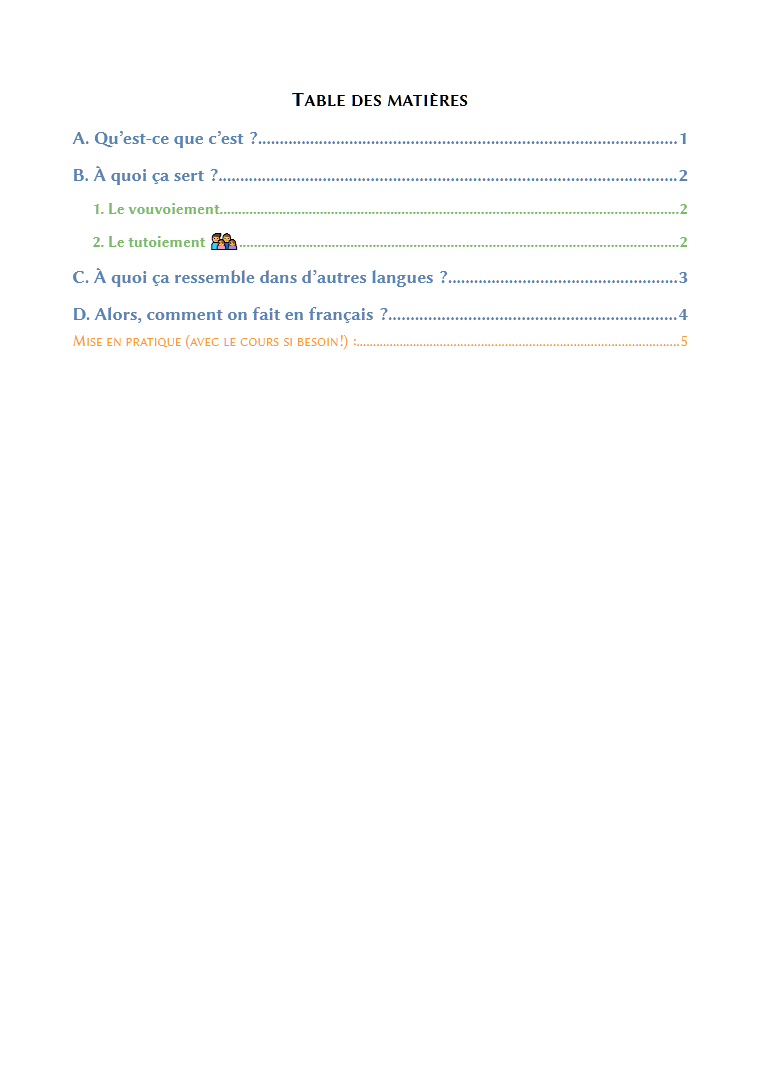
Read more…: L’essentiel – Le vouvoiement en françaisThis sheet addresses the use of formal address in French as a social norm: what it is used for, when to use it, and what it communicates depending on the context. It provides a clear explanation, intercultural comparisons, and a variety of activities (observation, role-playing, pragmatic analysis). French version. Contact me for a translation.
-
Public cible :
Allophones and Learner speakers
Public élargi :
Professionals and accompanying persons
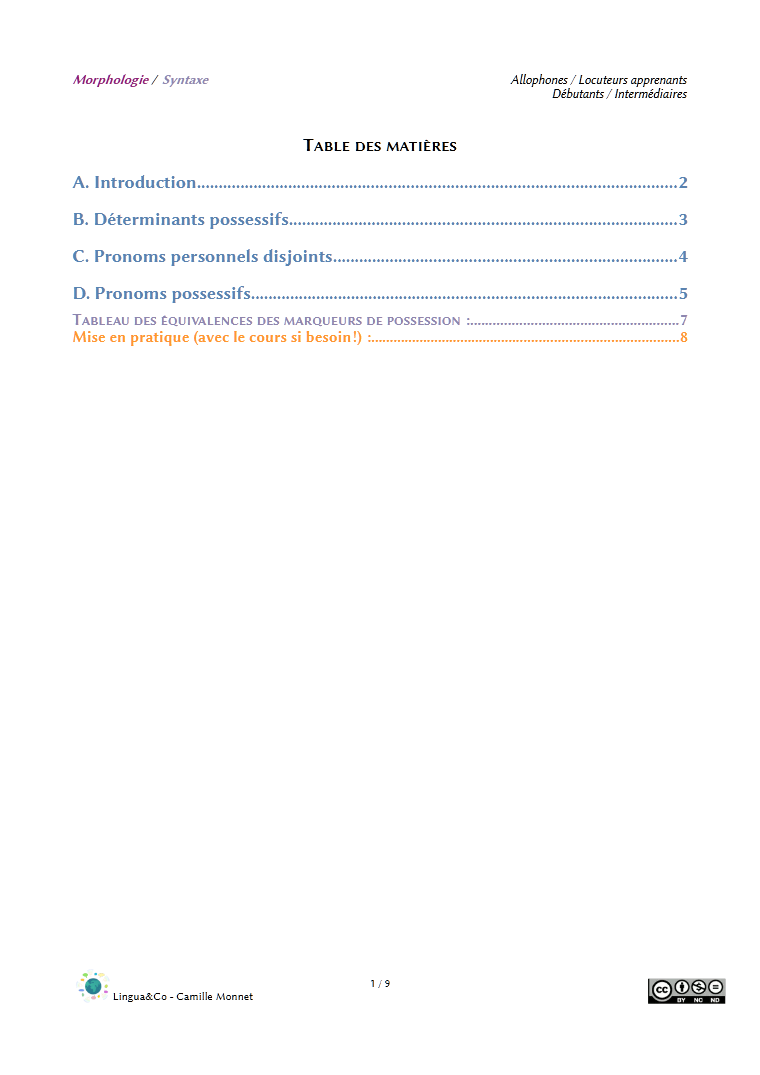
Read more…: L’essentiel – Les marqueurs du possessifThis sheet covers the concept of possessive markers and explains how they work, how to recognize them, their meaning, and their usefulness. It contains a step-by-step theoretical explanation, illustrated and color-coded, as well as various practical activities (written and oral) accompanied by explanatory corrections. French version. Contact me for a translation.
-
Public cible :
Personnes accueillies en structure and Équipes accompagnantes
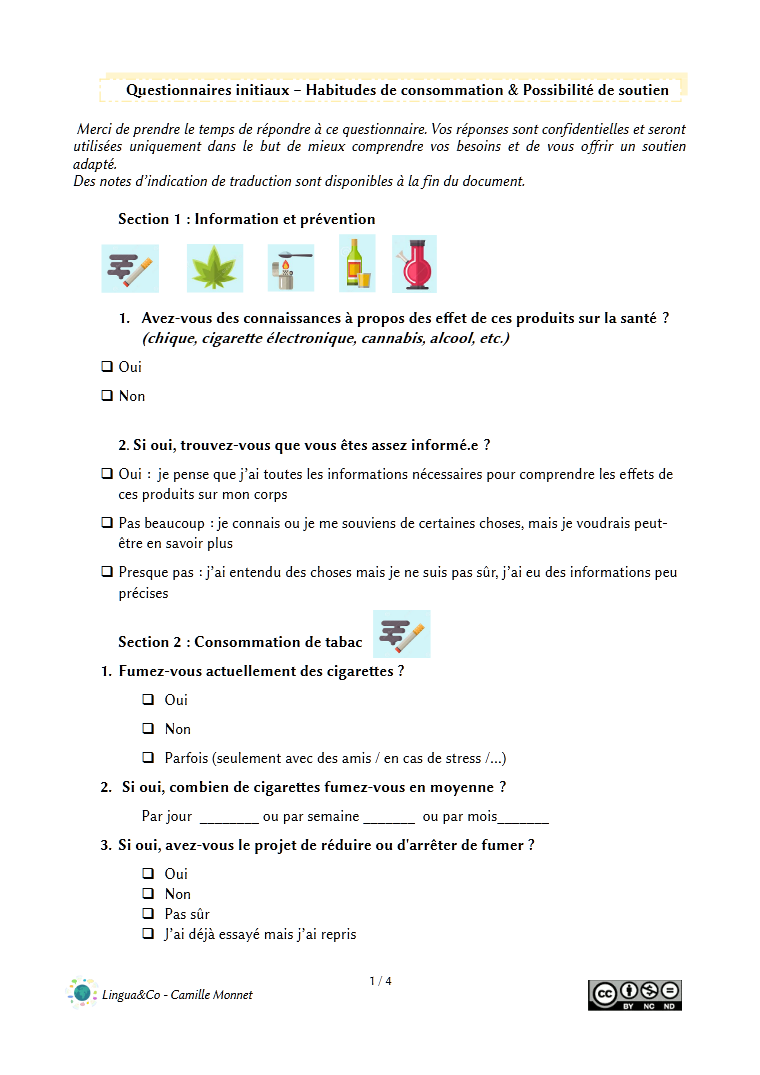
Read more…: Questionnaires initiaux – Consommations à risque de dépendanceThis questionnaire is the third in a series of three. It is designed to support young people in a humane and respectful manner. It is aimed at audiences potentially exposed to risky consumption (tobacco, alcohol, cannabis, etc.) and seeks to provide a safe, free, pressure-free space for discussion. French version. Contact me for a translation.
-
Public cible :
Personnes accueillies en structure and Équipes accompagnantes
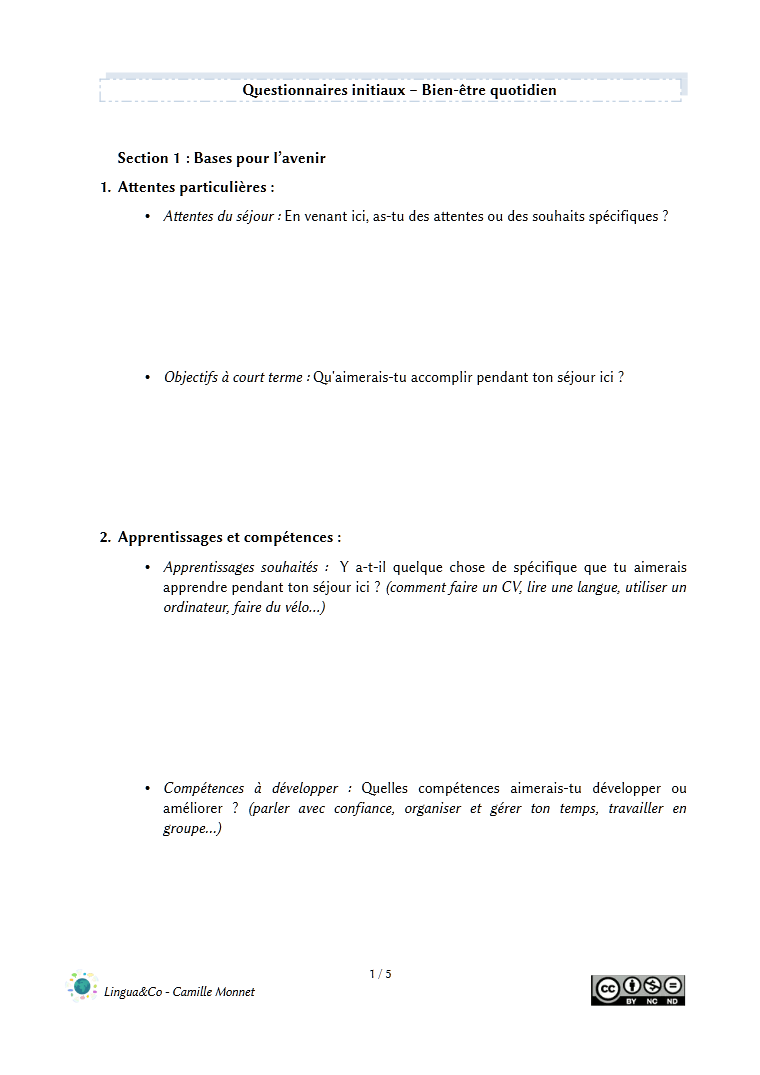
Read more…: Questionnaires initiaux – Autonomie et bien-être quotidienThis questionnaire was designed to create a respectful and supportive space for discussion about everyday independence (food, finances, future plans, etc.). The tool encourages people to talk freely about their current and future independence in a safe environment, where every answer is voluntary. It helps to provide individualized support. French version. Contact me for a translation
-
Public cible :
Personnes accueillies en structure and Équipes accompagnantes
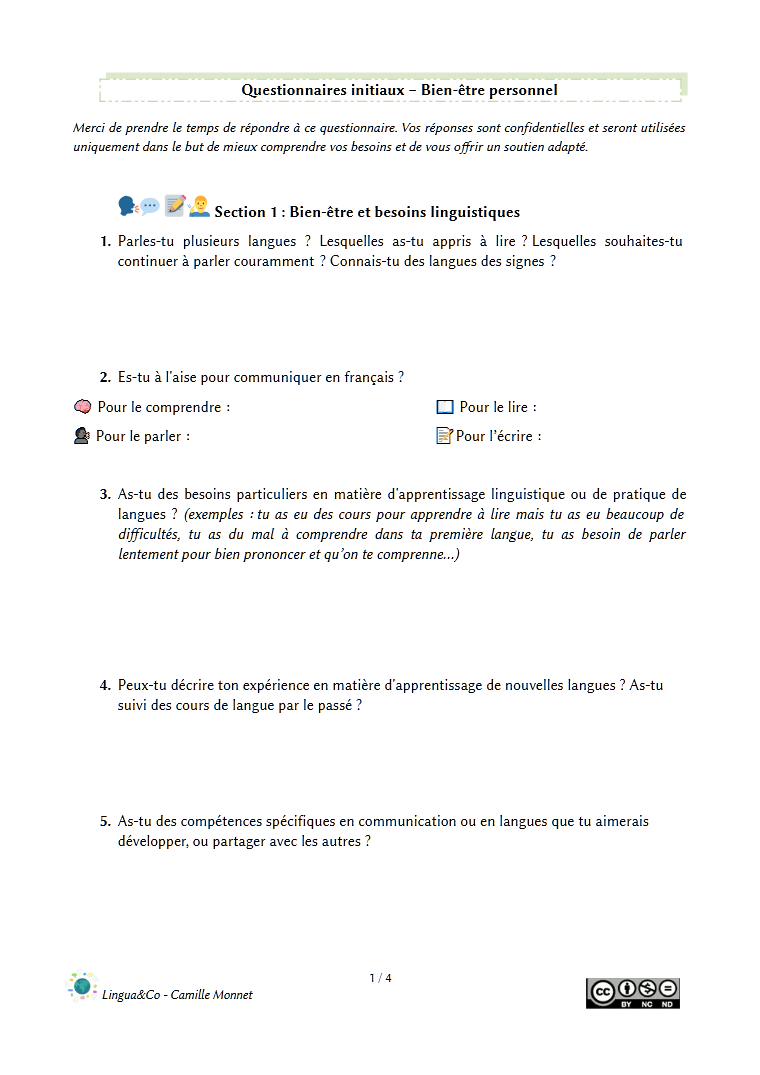
Read more…: Questionnaires initiaux – Bien-être personnelThis questionnaire was designed to create a respectful and supportive space for discussion about personal well-being. It can be used with young people who speak other languages (with an interpreter) or who cannot read, in an educational or medical-social setting. The tool encourages people to talk about themselves freely, in a safe environment, where every answer is welcome. It helps to provide individualized support. French version. Contact me for a translation.
-

Public cible :
Allophones and Learner speakers
Public élargi :
Professionals and accompanying persons
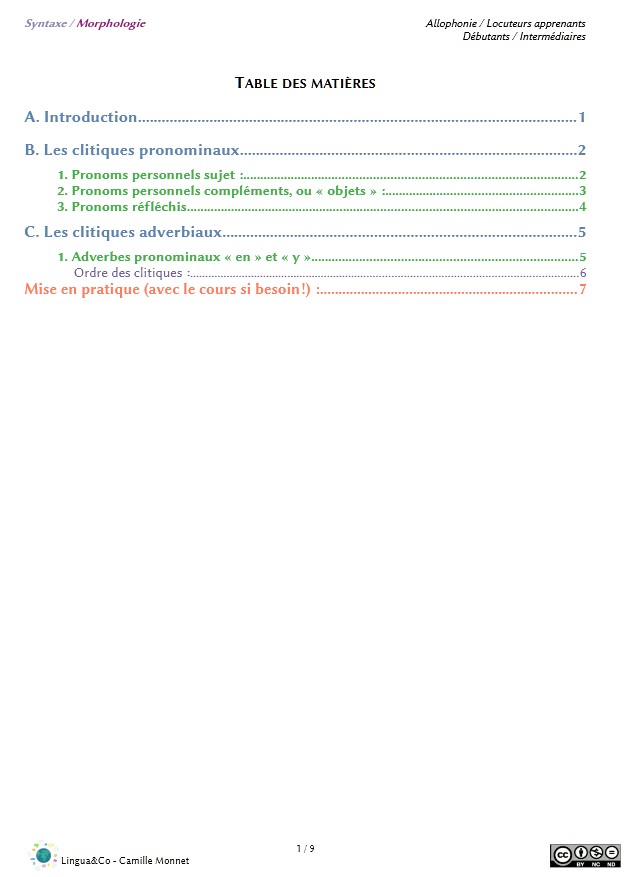
Read more…: L’essentiel – Les pronoms clitiquesThis sheet covers the concept of clitic pronouns and explains how they work, how to recognize them, their meaning, and their usefulness. It contains a step-by-step theoretical explanation, illustrated and color-coded, as well as various practical exercises (written and oral) accompanied by explanatory corrections. French version. Contact me for a translation.
-

Public cible :
Locuteurs non-lecteurs, allophones, en apprentissage de l’autonomie and Structures éducatives et sociales
Public élargi :
ASD / ADHD
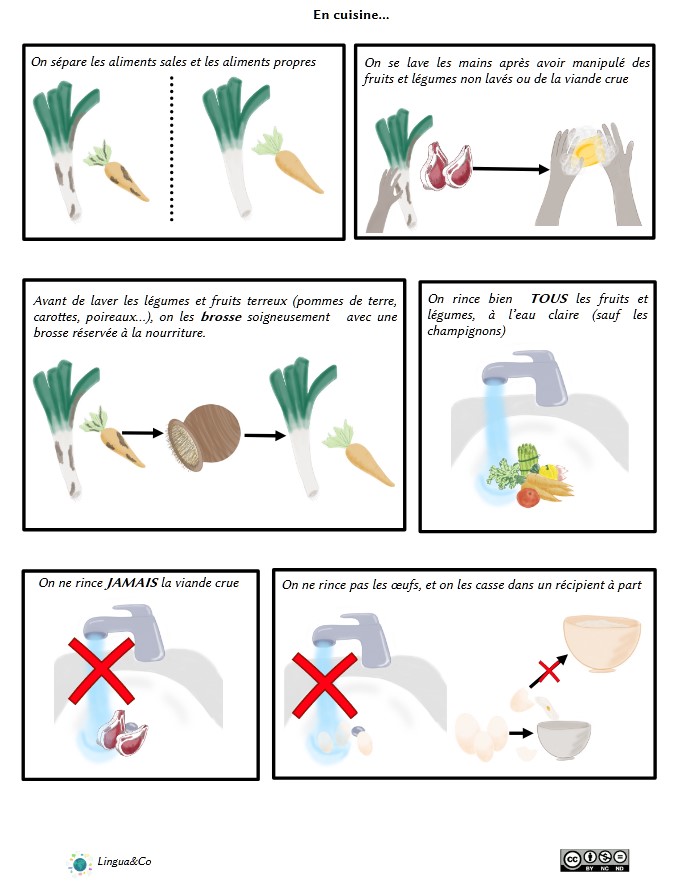
Read more…: Fiche illustrée – Hygiène en cuisine (les aliments)This illustrated sheet presents the correct procedures to follow when handling food in the kitchen, particularly in communal kitchens, in order to avoid cross-contamination. It is designed to be understood by everyone, particularly non-readers, people with specific needs, those learning French, etc.
-

Public cible :
Locuteurs non-lecteurs, allophones, en apprentissage de l’autonomie and Structures éducatives et sociales
Public élargi :
ASD / ADHD
Read more…: Fiche illustrée – Hygiène en cuisine (les mains)This illustrated sheet presents the correct hand hygiene practices to adopt in the kitchen, particularly in collective kitchens but also in general, to avoid contamination. It is designed to be understood by everyone, particularly non-readers, people with specific needs, those learning French, etc.
-

Public cible :
Allophones and Professionnels
Public opportun :
Non-verbal ASD
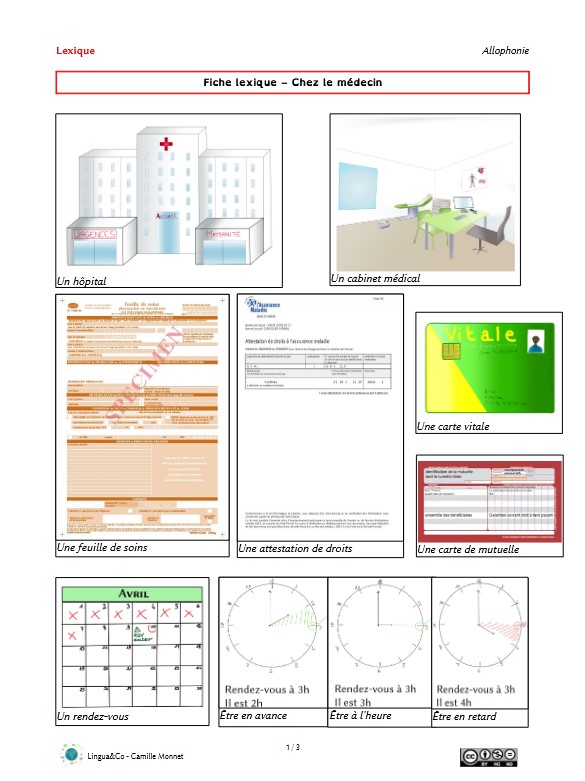
Read more…: Fiche lexique – Chez le médecinThis educational sheet is a visual and phonetic tool designed to facilitate learning by non-native French speakers of vocabulary related to medical appointments. It includes captioned illustrations and summary tables with IPA transcription.
Portrait format / Colour / 3 pages

 English (UK)
  Français